

Precision ball screws: operation and maintenance rules
2026-08-25
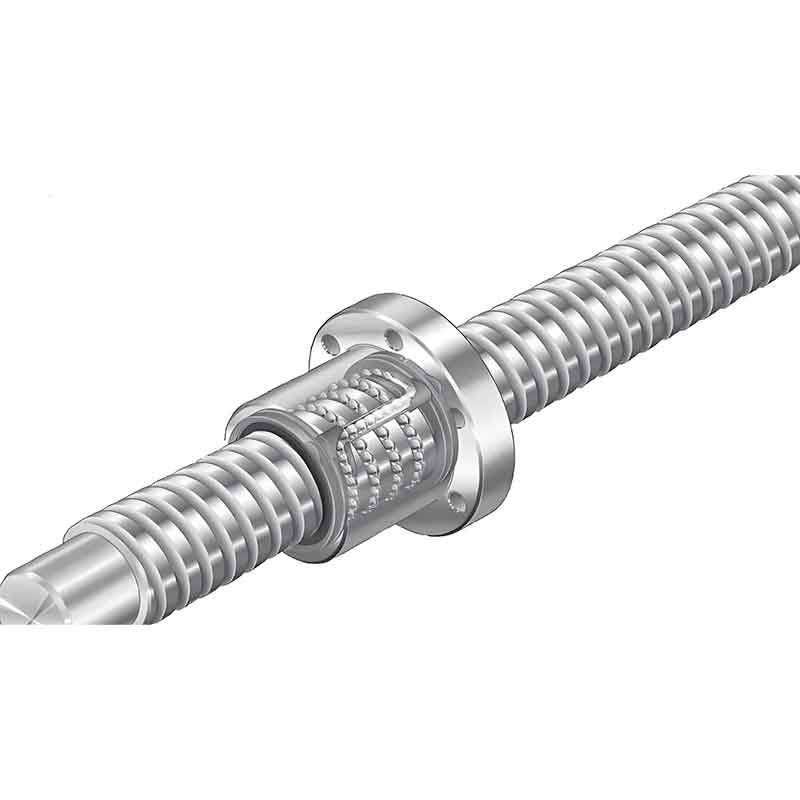
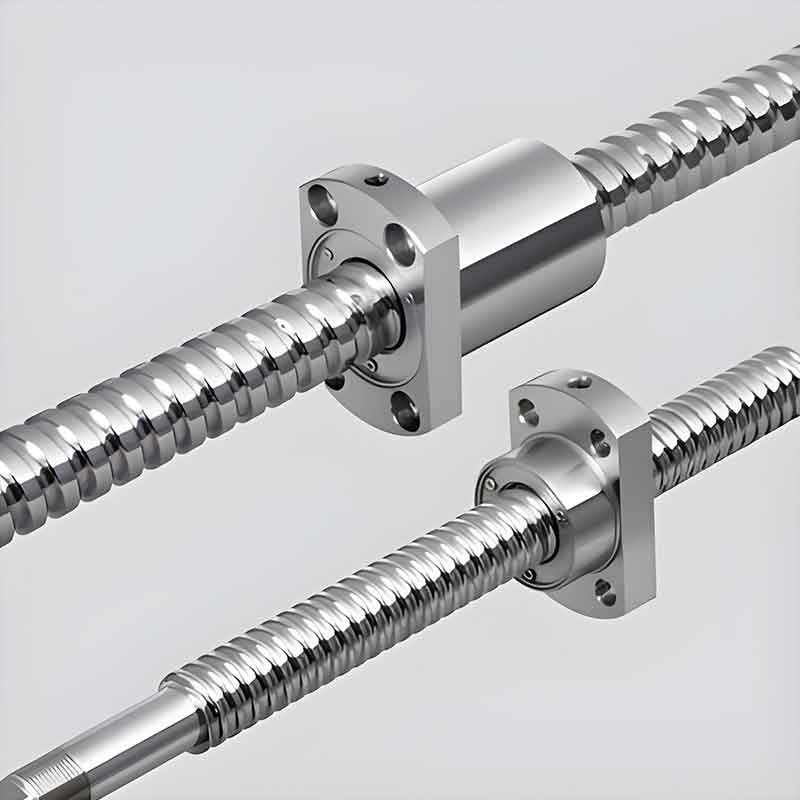
In automated equipment, precision machine tools, semiconductor devices and intelligent energy systems, the precision ball screw is a key component for high-precision linear motion and positioning, rightfully considered the “drive heart” of precision equipment. With high efficiency, low friction, high precision, transmission reversibility and long service life, ball screws are widely used in scenarios involving high-speed feeding, precision positioning and heavy reversing movements.
However, the screw pair is a high-precision transmission element that is extremely sensitive to dust, contamination, lubrication, installation and loading conditions. Improper operation and insufficient maintenance may result in poor precision, noise and jamming, excessive heat, ball wear, nut jamming, corrosion and other malfunctions, which directly affects the processing accuracy and production stability. This material systematically outlines operating rules, basic maintenance requirements and prohibited actions, which serves as professional guidance to ensure stable operation of equipment and extend the service life of screw pairs.
I. Operating rules for precision ball screws
1. It is prohibited to exceed the permissible load and stroke
The rated dynamic and static load capacity, as well as the effective stroke of the screw pair, are specified by the manufacturer. Operation with excess load or stroke is strictly prohibited. During the setup and production process, hard persistent impacts, forced pushing of workpieces and shock overloads are not allowed. Overload operation causes plastic deformation of the balls, dents in the raceways and loss of preload, causing permanent damage to the accuracy of the screw pair that cannot be repaired. Long-term concentrated loading at one point is also prohibited to avoid local wear of the raceways.
2. High-speed emergency stops and frequent reversals are prohibited.
The precision screw pair is designed for smooth start and stop and uniform feed. Frequent high-speed emergency stops, flash reversals, and impact feeds create significant inertial shock loads, causing nut ball vibration, raceway peeling, and preload failure, resulting in equipment vibration, positioning deviations, and operating noise. In everyday use, it is necessary to correctly set acceleration and deceleration parameters to ensure smooth operation and reduce shock loads.
3. Ensuring alignment and parallelism of installation, eliminating eccentric loading
Up to 80% of screw pair failures are associated with installation errors. The screw pair, guides, slider table and support units must be mounted in compliance with parallelism and alignment. Forced installation, rigid straightening and skewed tightening are prohibited. Improper installation results in side loading, eccentric friction, one-sided wear and abnormal heating, which causes loss of accuracy, galling and noise in a short time. During routine inspections, it is necessary to monitor the landing bases, the tightening torque of the mounting screws and the alignment of the support units.
4. Elimination of exposure to dust, chips, oils and humid environments
The ball screw has an open precision design with close raceway clearances. When chips, dust and abrasive particles get inside the nut, they scratch the races and balls, causing irreversible wear. Humid environments, water mist and corrosive vapors cause oxidation and corrosion of the surface, destroying the mirror surface of the raceways. During operation, it is necessary to ensure the integrity of protective covers and telescopic covers; Damaged elements should be replaced immediately to prevent foreign particles from entering the drive area.
II. Basic maintenance rules
1. Lubrication is key to long life
The screw pair must always be in a state of continuous, uniform and clean lubrication. Lack of lubrication and the use of contaminated oil are the main reasons for screw failure.
1) Lubricant selection: For high-speed precision screws, it is recommended to use 46#/68# grade precision guide oil or special ball screw oil. For heavily loaded low-speed mechanisms with automatic lubrication, it is recommended to use lithium greases of NLGI 1#/2# class. It is prohibited to use low-quality, contaminated or expired lubricants, as well as mixing oils of different brands.
2) Lubrication frequency: For standard automated equipment - every 7–15 days; for high-speed, high-frequency operation or in a dusty environment - every 3–5 days; for precision machines and semiconductor equipment - daily minimum addition of oil to ensure uniform coverage of the raceways with an oil film.
3) Method of applying lubricant: Lubricant is supplied evenly through the grease nipple on the nut, after which the screw pair makes 3–5 full strokes to distribute the lubricant over the entire surface of the raceways, eliminating local dry friction and the accumulation of excess lubricant.
2. Cleaning - preventing abrasive wear
After stopping the equipment, it is necessary to promptly remove chips, dust and oil contamination from the surface of the screw pair using lint-free wipes. Do not use compressed air to blow through the screw pair, as this may blow dust into the nut. When not in use for a long period of time, equipment should be cleaned, coated with anti-corrosion oil and covered with protective covers to prevent oxidation and accumulation of contaminants.
3. Periodic inspection of accuracy and technical condition
The enterprise must keep a log of periodic checks of the condition of screw pairs with monitoring of the following parameters: the presence of extraneous noise during operation, feed vibration, positioning deviation, temperature of the screw pair, lubricant condition, integrity of protective casings and tightening of mounting screws. If there is the slightest sign of noise, jamming or accuracy deviation, the equipment should be stopped immediately for inspection; operation of a faulty screw pair is not allowed in order to avoid the development of a minor malfunction into a complete failure.
4. Maintenance during long-term downtime
If the equipment is idle for a long time, it is necessary to completely clean the screw pair, renew the lubricant, apply anti-corrosion oil, and move the slider table to the middle position to evenly distribute the load and prevent deformation from prolonged one-sided loading. Additionally, the protective covers should be hermetically sealed to isolate them from moist air and dust, and the equipment should also be periodically idled for maintenance purposes.
III. Strictly prohibited actions
Do not operate without lubrication - dry rubbing for a few minutes will cause irreversible damage to the raceways.
It is prohibited to exceed the stroke with a hard impact on the stops - mechanical shock loads are unacceptable.
It is prohibited for dust, chips and foreign particles to get inside the nut.
Installation with distortions, forced installation and operation with an eccentric load is prohibited.
The use of low-quality oils, mixing of lubricants of different brands and excessive application of lubricant is prohibited.
Long-term operation with high-speed emergency stops and frequent shock reverses is prohibited.
IV. Quick diagnosis of typical faults and measures to eliminate them
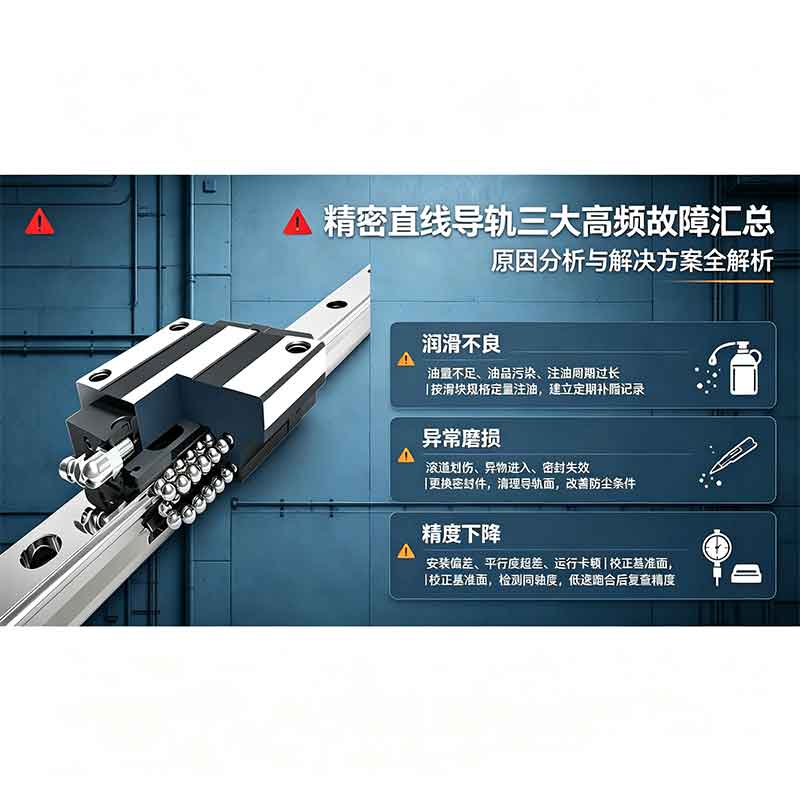
1. Extraneous noise, jamming during operation: The most common causes are insufficient lubrication, contamination, loss of preload, misalignment during installation. Needs cleaning, oil change, parallelism and alignment recalibration.
2. Positioning deviation, loss of precision: The most common causes are raceway wear, loose preload, loose mounting screws, uneven load distribution. It is necessary to check and tighten the fasteners, recalibrate the accuracy, and replace worn parts.
3. Excessive heating of the screw pair: The most common causes are unsuitable oil, insufficient lubrication, friction due to eccentric load, shock loads at high speeds. It is necessary to replace the lubricant with an appropriate one, optimize acceleration and deceleration parameters, as well as restore installation accuracy.
4. Surface corrosion, blackening and oxidation: The most common causes are damp environments, insufficient protection, and prolonged downtime without maintenance. It requires cleaning from corrosion, applying anti-corrosion oil, and strengthening dust and moisture protection measures.
V. Conclusion
Precision ball screws are high-precision and vulnerable parts; Their service life and equipment accuracy are entirely dependent on proper use, regular lubrication, cleaning and protection, and standard installation. In most cases, premature screw wear is not due to product quality, but due to improper use and lack of maintenance. The implementation of standardized daily maintenance procedures and strict control of four key factors - load, rotation speed, lubrication and cleaning - can effectively extend the service life of screws, ensure long-term stable operation, high accuracy and low failure rates of automated equipment and precision machine tools, and significantly reduce plant repair costs and downtime losses.