
Working principle of ball screw
2026-09-01
In today's fields of precision automation, CNC machining, semiconductor manufacturing and new energy equipment, the ball screw is a key drive component that converts rotary motion into linear motion. It serves as the main element for high-precision positioning, high-speed feeding and stable motion transmission in equipment. Compared with traditional trapezoidal screw transmission, ball screw transmission uses rolling friction instead of sliding friction, which has the key advantages of high precision, high efficiency, low wear, low noise and reverse motion transmission capability. Due to these characteristics, ball screws are widely used in high-precision drive systems. This article discusses in detail the basic design of a ball screw, its operating principle, the advantages of motion transmission and the basic functioning mechanisms, which will allow industry specialists to comprehensively understand its operating principle.

I. Main structural elements of a ball screw
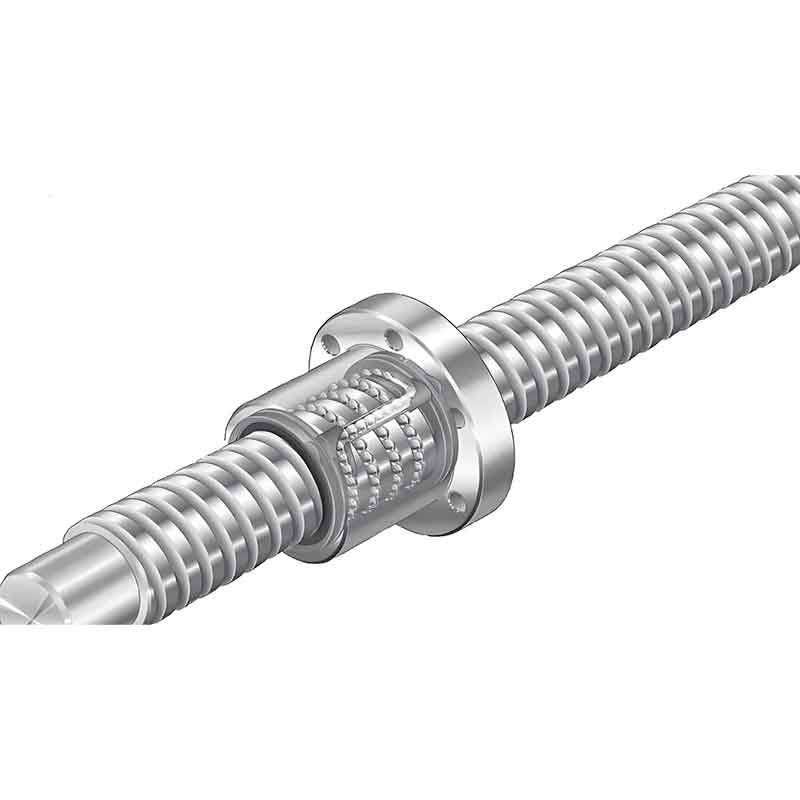
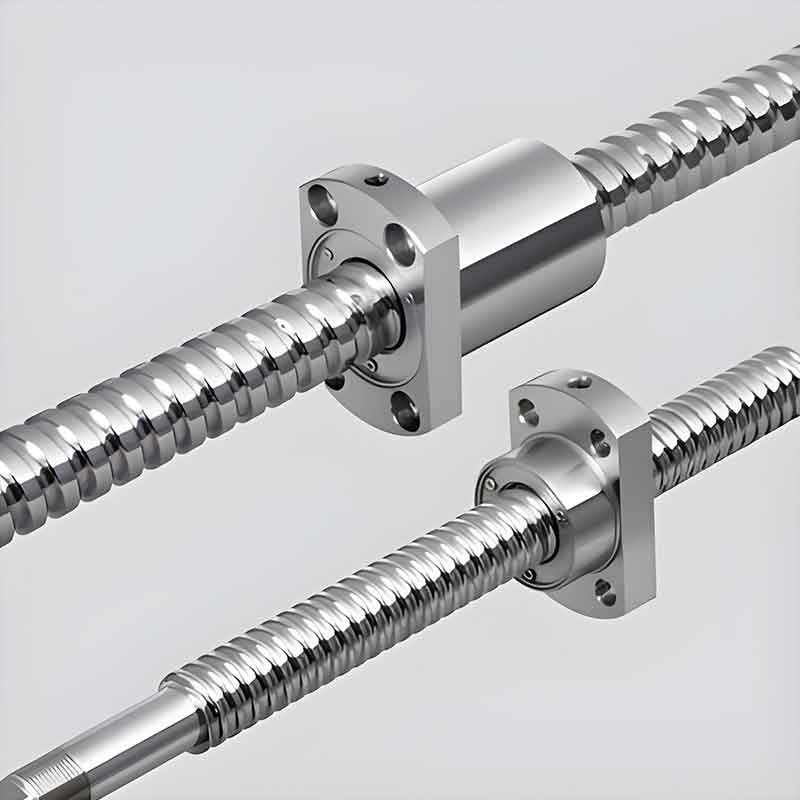
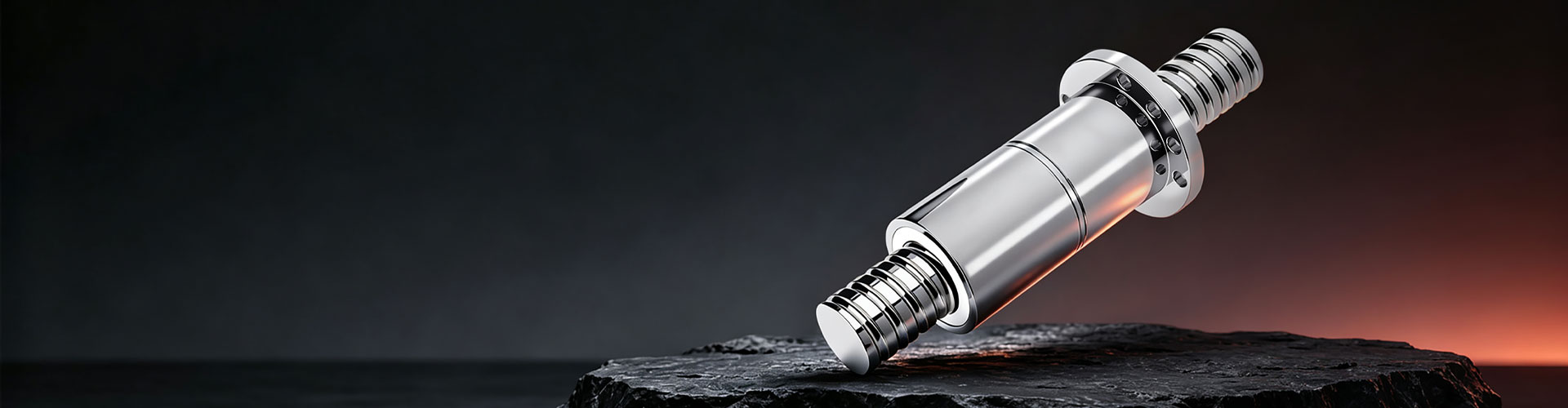
High precision motion transmission in the ball screw is ensured by a precisely matched integrated design. A ball screw consists of a ball screw shaft, a ball screw nut, steel balls, a ball circulation system, a ball return device, and dust seals—six major components. All elements work in harmony, forming a closed motion transmission system with ball circulation.
High-precision arc-shaped raceways are made on the surface of the ball screw shaft, which serve as the main guides for the movement of the balls. The ball screw nut is a mating movable element, inside of which there are also corresponding raceways that precisely interact with the shaft tracks.
A plurality of high-precision steel balls are located between the inner and outer raceways and serve as the main rolling element. The circulation and return system of the balls ensures their continuous repeated movement along a closed circuit. Seals installed on both sides prevent the entry of dust and contaminants, ensuring consistent motion accuracy.
II. Basic Working Principle of Ball Screw
The basic operating principle of the ball screw is to replace the traditional sliding friction with rolling friction, and effectively convert the motor torque into linear force and linear movement through closed circulation of the balls. In a conventional screw drive, the thread surfaces directly contact and slide against each other, resulting in significant frictional resistance, rapid wear and relatively low gear efficiency.
In a ball screw, high-precision steel balls are placed between the helical raceways of the shaft and nut. When a servo motor or stepper motor drives the ball screw, the helix angle of the raceway creates an axial force on the steel balls, causing them to roll continuously along the raceway. As a result, the ball screw nut makes a smooth reciprocating linear movement. In the process of transmitting motion, the “sliding surfaces” contact is replaced by point contact and rolling, due to which the friction resistance is significantly reduced.
At the same time, a special ball circulation and return device directs the balls that have reached the end of the stroke back to the initial part of the raceway. After this, they are again included in the circulation, forming a continuous closed system of ball movement. This ensures long-lasting, stable and high-speed linear motion transmission.
Depending on the installation method, two options for transmitting motion are possible: the screw is fixed, the nut rotates and moves linearly; the nut is fixed, the screw rotates and makes reciprocating movement. These options make it possible to adapt ball screws to different design and installation conditions of automated equipment and machine modules.
III. Preload principle: high-precision motion transmission without backlash
Conventional screw gears have backlash, which reduces positioning accuracy and cannot meet the requirements of precision equipment. In precision ball screws, backlash in the gear is virtually eliminated by using a preload design. This is one of the key factors to ensure positioning with micron precision.
Technologies such as dual-nut preload, pitch-difference preload, and oversized ball preload ensure that the balls remain in constant, tight contact with the inner and outer raceways without play or loosening.
When switching the direction of movement of the equipment, there are no problems associated with idling, position shifting, jamming and vibration. Combined with precision grinding, this results in ultra-high positional repeatability of up to ±0.003 mm, ideal for high-precision applications such as precision machining, IC inspection, and precision assembly positioning.

IV. Four Key Benefits of Ball Screw
1. High transmission efficiency and energy saving
Due to the principle of rolling friction, the efficiency of ball screw can reach 90-98%, which is 2-3 times higher than traditional trapezoidal screw. The same motor power provides higher feed speeds and lower power consumption, effectively reducing equipment load and heat generation and making ball screws ideal for high-speed automated manufacturing processes.
2. Minimal friction losses and long service life
Thanks to rolling contact, wear of the contact surfaces is significantly reduced. In combination with a uniform supply of lubricant, the wear rate of raceways and balls remains extremely low. When properly operated and regularly maintained, a precision ball screw can provide tens of thousands of hours of stable performance, significantly reducing component replacement and equipment maintenance costs.
3. Smooth and silent motion transmission, high stability
The closed ball circulation system ensures uniform load distribution and eliminates impacts typical of sliding contact, as well as sticking and jerking. During operation, vibration and noise levels remain low, allowing ball screws to be used in medical equipment, optical inspection systems, precision measuring instruments and other applications that place particularly high demands on smoothness and stability of movement.
4. Bidirectional reversible motion transmission and versatility of application
The ball screw does not have the property of self-braking, therefore it provides free transmission of movement in both forward and reverse directions. It can be used both to transmit movement from the engine to the mechanism, and for passive return movement under the influence of external force. This makes ball screws suitable for various operating modes of flexible automated production lines, lifting modules, handling and handling devices.
V. Main Applications of Ball Screws
With its key advantages of high precision, high efficiency, low wear and backlash-free motion transmission, the ball screw has become one of the most important drive components in today's high-tech manufacturing. It is widely used in precision equipment in various industries.
Precision machine tools:The feed axes of CNC machining centers, grinding and milling machines use backlash-free gearing to ensure high precision and stability in machining parts.
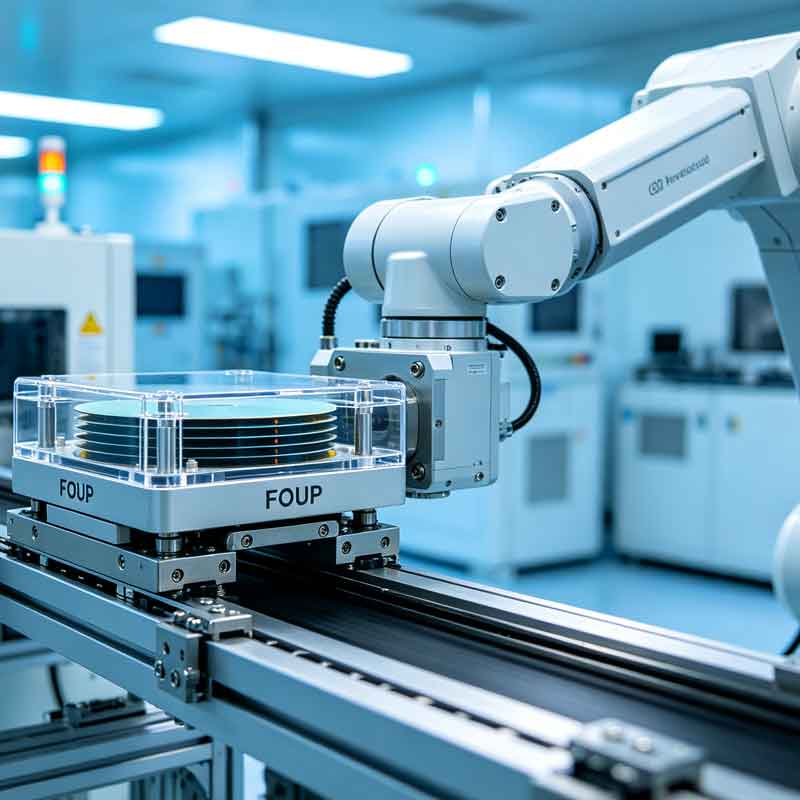
Semiconductor and Electronics Industry:Photolithography equipment, die assembly machines, automatic optical inspection (AOI) systems, and surface mount machines (SMT) use the micron-precision positioning principle for high-precision processing and inspection of semiconductor components.
Equipment for the production of new energy products:Battery cell electrode laying machines, electrode sheet coating machines, and silicon wafer cutting machines in the photovoltaic industry all require high speed, high cycle frequency, and long-term continuous operation, which is exactly the same as the characteristics of ball screws.
Medical equipment and precision instruments:Medical imaging systems, surgical robots and precision instrumentation use smooth, low-noise motion transmission to ensure accurate and stable operation of equipment.
Universal industrial automation:Linear modules, moving platforms, lifting devices and laser processing equipment use ball screws to realize efficient and stable linear motion.

VI. Conclusion
In other words, the basic operating principle of the ball screw is to replace the traditional sliding friction with the rolling friction of balls, and use a closed circulation system together with preload technology to realize efficient, high-precision, backlash-free and reversible linear motion transmission. All the operational advantages of the ball screw are due to innovations in its design and the principle of motion transmission. This effectively solves the main problems of traditional screw gears, such as low precision, rapid wear, low efficiency and significant backlash.
A thorough understanding of ball screw operation allows equipment design and maintenance professionals to properly select appropriate components, comply with operation and maintenance requirements, maximize transmission performance, extend equipment life, and ensure stable and efficient operation of today's high-tech equipment.